
Every triumph in this series has a quieter, harder-to-tell underside. This is the story of what nearly twenty years of saying "yes" actually cost — and everything it gave in return.
Steve Campbell
Chairman & Former Executive Director
Part Four of The Final Chapter — stories, memories and reflections from nearly twenty years behind Scotfest.
By Steve Campbell, Chairman and Former Executive Director
It would be very easy to write this series as a victory lap.
Look what we built.
Look how much Scotfest grew.
Look at the World's Largest Kilt.
Look at the crowds.
The performers.
The athletes.
The friendships.
The ridiculous things we somehow managed to pull off.
All of those stories are true.
But they are only half of the truth.
Because everything you choose to give your time to takes that time from somewhere else.
Every time you say yes to one thing, whether you realize it or not, you are usually saying no to something else.
And for almost twenty years, I said yes to Scotfest.
A lot.
Probably too much.
So if I'm going to tell this story honestly, there is another side to it.
Scotfest gave me more than I could possibly have imagined when I volunteered in 2007.
It also cost me more than I understood at the time.
That fact hits differently now.
When I first volunteered to help Scotfest in July 2007, my son, Roan, was only about six months old.
He is an adult now.
Which means his entire childhood happened during the same years I was building Scotfest.
I don't think I fully appreciated that while it was happening.
When you're caught in the middle of something, life doesn't present itself to you in neat chapters.
You don't think:
"I am currently sacrificing part of my son's childhood for a Scottish festival."
You think:
I just need to get through this meeting.
I need to finish this sponsor proposal.
I need to deal with this vendor.
We need to solve this problem.
I'll take care of that next week.
We'll take the vacation later.
Things will calm down after the festival.
Except the festival ends.
Then there are bills.
Thank-yous.
Reports.
Sponsor follow-ups.
Planning meetings.
Renewals.
Contracts.
The next year.
And suddenly "later" has become years.
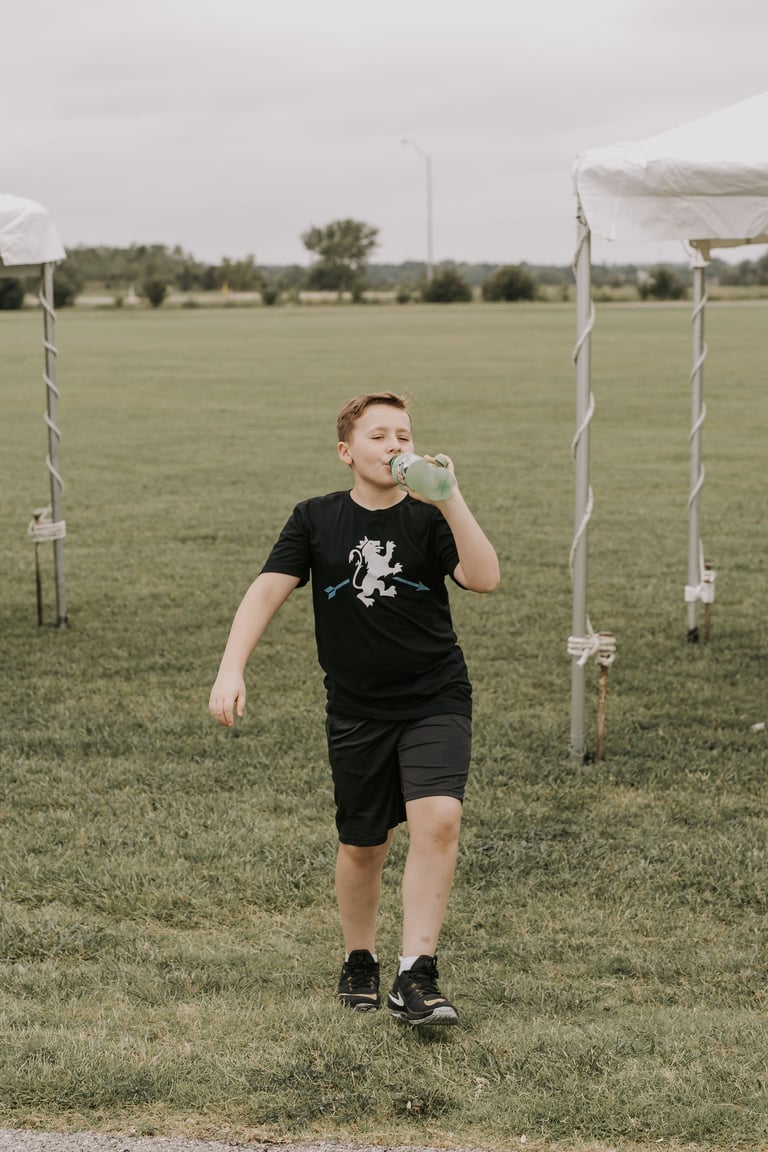
There was never really a clean separation between Scotfest and home.
Our house became storage.
The garage became a warehouse.
The dining table became an office.
Vehicles became festival vehicles.
Boxes appeared.
Signs appeared.
Equipment appeared.
Paperwork appeared.
Things that belonged at Scotfest somehow migrated into every available corner of family life.
And the work wasn't confined to normal business hours.
Volunteer organizations rarely operate that way.
People have jobs.
So meetings happen at night.
Phone calls happen after work.
Problems happen whenever they feel like happening.
In the early years, a lot of our meetings took place over a beer at Paddy's.
One meeting became two.
Two became several.
I would come home late.
I would have names and phone numbers from people I'd met who had offered to help, sponsor something, provide a service, connect us with someone or contribute in some other way.
And sometimes I couldn't even remember exactly who a particular number belonged to or why I'd written it down.
From my perspective, it was festival networking.
From my wife's perspective, it understandably didn't always look that innocent.
That became a source of mistrust.
And once mistrust enters a relationship, explanations that are completely truthful can still sound like excuses.
That's a difficult question.
And the honest answer is:
It contributed to it. Significantly.
But saying "Scotfest destroyed my marriage" would also be too easy.
And unfair.
Scotfest was not a living thing that walked into our house and wrecked anything.
I made choices.
Aleah made choices.
We both failed, at different times and in different ways, to communicate effectively.
We stopped really listening to what the other person needed.
I was emotionally absent too often.
There was always another meeting.
Another problem.
Another obligation.
Another person needing an answer.
Another reason that whatever was happening at home could wait.
And when you continually tell yourself that something is temporary, you don't necessarily notice when temporary has become your normal life.
Looking back, I can see that much more clearly than I could while I was living it.
This would be a much simpler story if everything connected to Scotfest and our marriage had been bad.
It wasn't.
Because when Aleah and I worked well together at Scotfest...
We were awesome.
And I mean that.
There were periods when we complemented one another extraordinarily well.
We could take on a difficult weekend, divide what needed to be done, solve problems and operate as a team.
There is something strange about being able to function brilliantly together in the middle of chaos while struggling to communicate effectively at home.
But relationships are complicated.
People are complicated.
Life is complicated.
The same thing can contain some of your best memories and some of your worst ones.
That is part of why I've never wanted to rewrite our history as though one of us was simply right and the other wrong.
We built things together.
We raised an incredible son together.
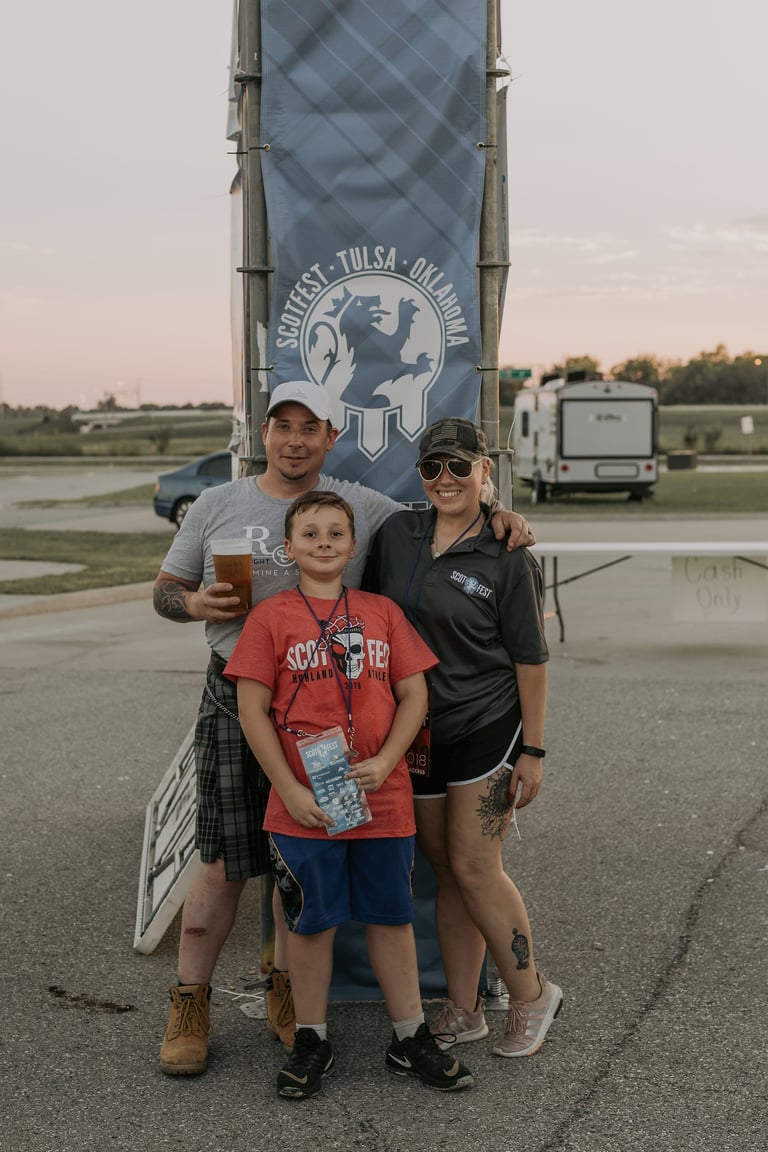
We also hurt one another.
We eventually went through a painful divorce.
For a while there was understandable anger and bitterness on both sides.
And somehow, after all of that, we eventually found our way to something I am genuinely grateful for.
Today we are friends.
We co-parent well.
We can talk.
We can laugh.
We can look back at parts of our life without needing to continue fighting the battles that belonged to another time.
Considering where we once were, I don't take that for granted.
And regardless of everything else, Aleah contributed to Scotfest too.
That deserves acknowledgment.
And thanks.
Roan didn't volunteer for Scotfest.
He was born into it.
Being the festival director's kid meant he grew up around musicians, athletes, volunteers, community leaders, vendors, board members and all of the assorted characters who became part of our world.
He volunteered in different roles as he grew older.
People within Scotfest watched him grow up.
And somewhere along the way, he apparently developed the impression that his parents were unusually cool because we seemed to know everybody and somehow knew people who could "make things happen."
That still makes me smile.
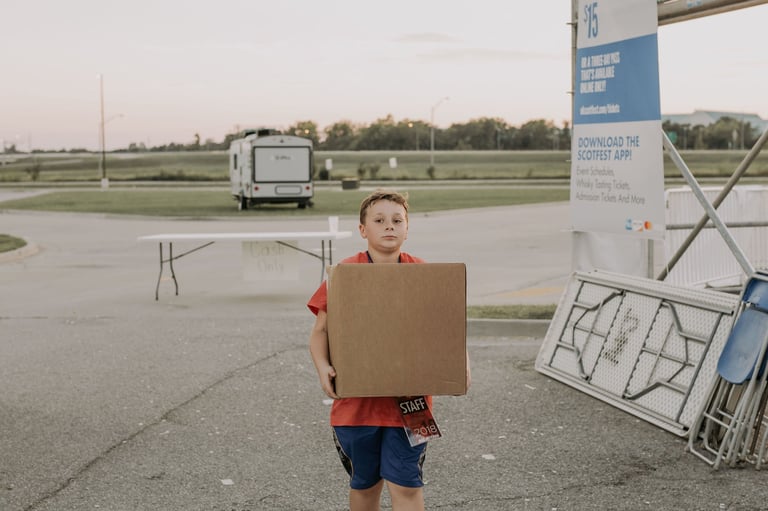
Because from his perspective, that was simply normal.
Of course your parents know the people running the university.
Of course they know the mayor.
Of course there are bands backstage.
Of course there are Highland athletes wandering around.
Of course somebody recognizable is sitting at the table.
That's just Mum and Dad's weird Scottish festival.
Scotfest gave him experiences most children never get.
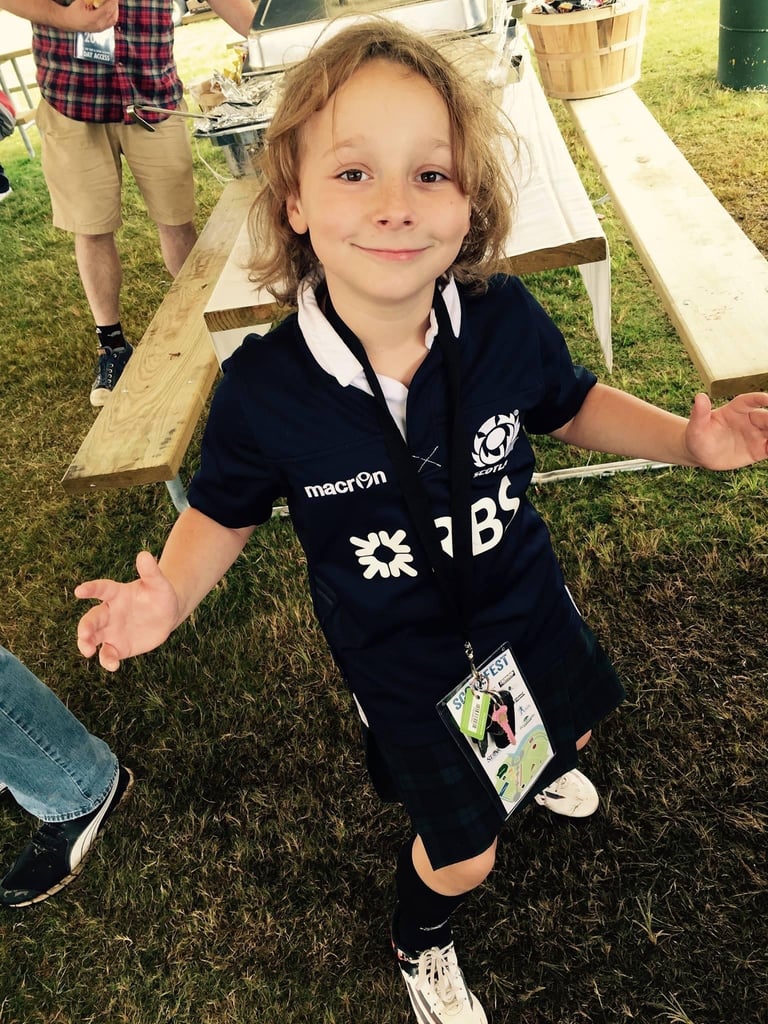
But I also have regrets.
There were vacations we never took.
Things that got postponed.
Weekends consumed by Scotfest.
Family time that I assumed I could replace later.
You can't.
That's one of the harder lessons of getting older.
You can make more money.
You can produce another event.
You can find another sponsor.
You cannot make your child six years old again.
One of the less visible burdens of running Scotfest was financial.
Over the years I personally fronted expenses.
Put things on my own credit card.
Bought emergency supplies.
Loaned equipment.
So did other people.
When you are deeply invested in keeping something alive, the boundaries between:
"The organization needs this"
and
"I'll just handle it"
can become dangerously thin.
And almost every year there was financial anxiety.
Would ticket sales come through?
Would the weather cooperate?
Would sponsors pay?
Would an unexpected expense destroy the margin?
Would enough people turn up?
In Tulsa particularly, people have historically been late ticket buyers.
That is frustrating when you're producing an event where most of the money has already been committed before the customer decides whether they feel like attending.
By 2022, Scotfest cost more than $600,000 to produce.
Think about the pressure behind that number.
Bands are contracted.
Infrastructure is booked.
Insurance is paid.
Equipment is rented.
Services are committed.
And then everyone watches the weather forecast.
A festival can be beautifully organized and still lose money because it rains at precisely the wrong time.
That responsibility followed me around all year.
Even during the good years.
Perhaps especially during the years when the event became bigger, because bigger successes came with bigger exposure.
Anyone who worked senior operations at Scotfest will probably laugh at the concept of sleep during festival week.
There were days when we were onsite before six in the morning.
There were nights when we left around three.
Then we came back at six.
You run largely on adrenaline.
Coffee.
Beer, occasionally.
Stubbornness.
And the knowledge that regardless of how tired you are, several thousand people are arriving shortly and do not care that you have slept for ninety-seven minutes.
Then the festival ends.
And the adrenaline disappears.
Every year, I crashed.
Physically.
Mentally.
I would often get sick afterward.
It was as though my body spent the entire festival negotiating with every available virus:
"Not now. Come back Monday."
And they did.
Scotfest created some of my closest friendships.
It also damaged others.
Pressure exposes people.
Sometimes that's wonderful.
You discover someone will turn up at three in the morning when you have two flat tires.
You discover someone will work beside you until neither of you can stand.
You discover someone will disagree with you furiously, share a beer with you an hour later and remain one of your closest friends for the next twenty years.
Other times, pressure reveals cracks.
People disappoint you.
You disappoint them.
Arguments become personal.
People walk away.
Some relationships recover.
Others don't.
There are people I met because of Scotfest who became family.
There are people I lost because of Scotfest.
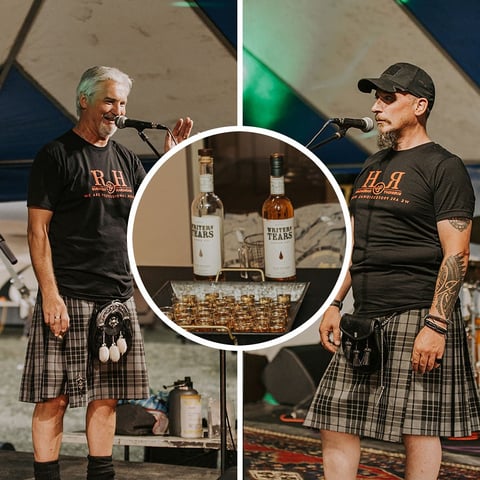
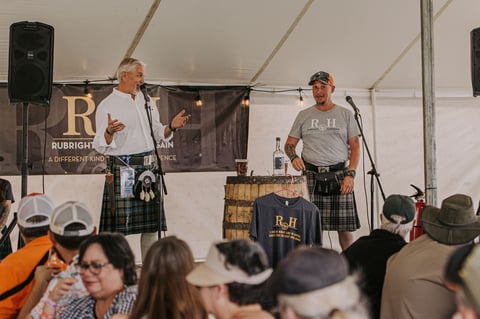
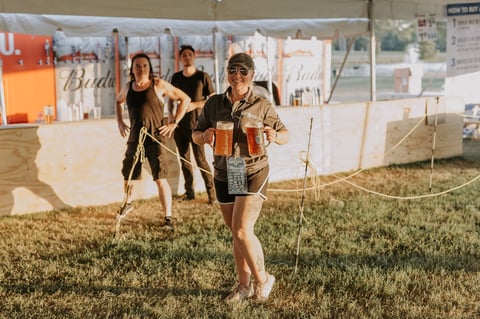
Both statements are true.
I have quit Scotfest in my head more times than I can count.
At least half a dozen times, I genuinely thought:
That's it. I'm done.
No more.
Let somebody else do it.
I have sacrificed enough.
I've had enough arguments.
I've spent enough money.
I've missed enough sleep.
I've solved enough problems.
I am finished.
And then...
Something happened.
A successful weekend.
A great crowd.
A volunteer saying something.
A child discovering their Scottish heritage.
A band having an extraordinary performance.
An athlete doing something incredible.
A conversation with someone who had been attending for years.
Or simply looking around the festival and realizing what all of us had created.
And the anger faded.
The exhaustion faded.
Eventually the next idea arrived.
And somehow I was back.
That is either dedication or a diagnosable condition.
I remain undecided.
That's the obvious question.
If Scotfest cost that much personally, why continue?
Because that isn't all it gave me.
Not remotely.
Scotfest gave me some of my closest friends.
People I never would have met otherwise.
It connected me more deeply with the Scottish community after leaving Scotland.
It gave me a place where my professional experience, cultural identity, stubbornness, creativity and apparently unhealthy tolerance for chaos could all be useful at the same time.
It gave me opportunities I couldn't have predicted.
It introduced me to extraordinary people.
It taught me things about leadership that no course ever could.
It taught me how people behave when they're tired.
How they behave when they're frightened.
How they behave when things are going wonderfully.
And how they behave when everything is falling apart.
It taught me that the people with the most impressive titles are not always the most valuable people in the room.
And that the person quietly picking up rubbish at midnight may be showing you more about leadership than the person giving the speech.
This one is harder to quantify.
For almost twenty years, Scotfest gave me something that needed me.
That can be intoxicating.
Perhaps dangerously so.
There was always a problem I could solve.
Something I could improve.
Something I could build.
Somebody who needed a decision.
Somebody who needed help.
Another year to make better.
Another attendance target.
Another idea.
Another challenge.
When something becomes that integrated into your identity, walking away becomes difficult even when you know you probably should.
Because eventually you're not only asking:
"What happens to Scotfest without me?"
You're also quietly asking:
"What am I without Scotfest?"
I don't think I understood that question until fairly recently.
Not pride in myself alone.
Pride in what we built.
I inherited an event in 2007 that was close to cancellation and carrying significant debt.
At the time, attendance was only a few thousand people.
By 2022, more than 30,000 people came through Scotfest.
Those numbers matter.
But the thing I'm proudest of isn't really the attendance.
It's what those numbers represent.
Thousands of families.
Thousands of memories.
Musicians who played our stages.
Athletes who competed on our fields.
Clans who gathered.
Vendors who built businesses.
Volunteers who found friendships.
Children who came back year after year.
People who discovered something about where their family came from.
People who discovered that Scottish culture was considerably more interesting than what they'd seen in Braveheart.
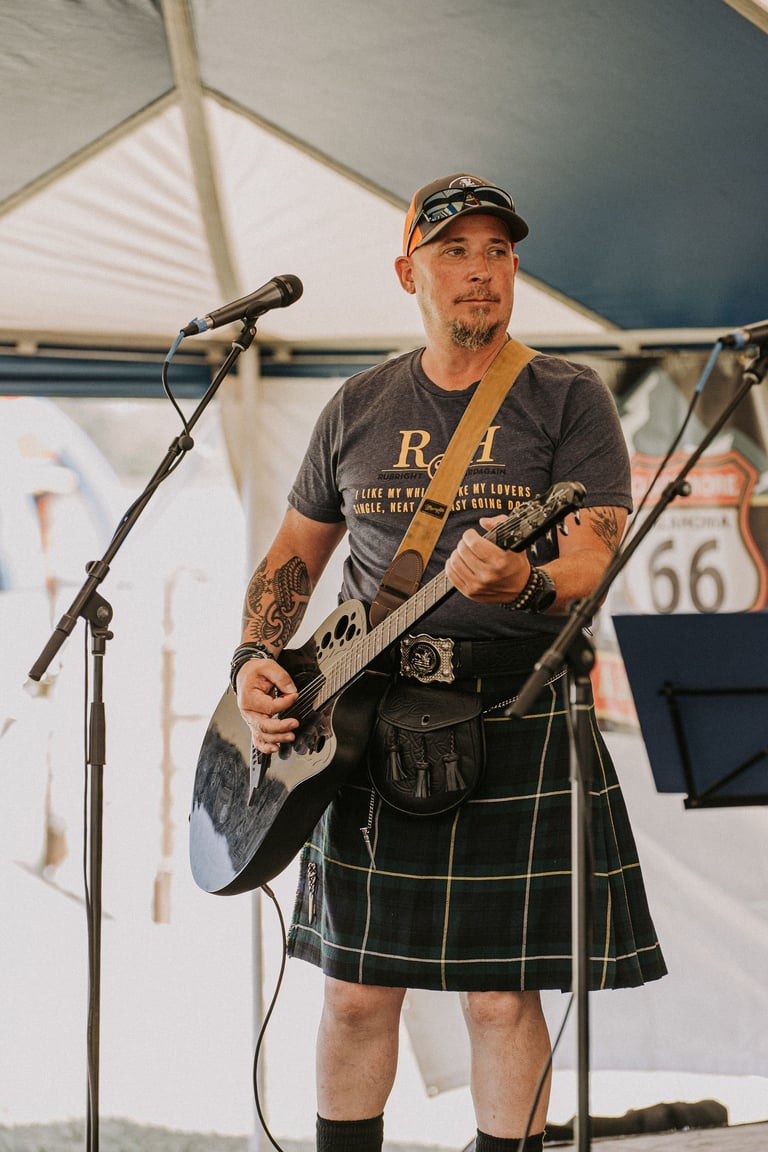
That is what we built.
That's complicated too.
If you sent me back to July 2007 knowing everything I know today and asked:
"Would you volunteer to help save Scotfest?"
Yes.
I think I would.
I couldn't have watched it collapse simply because things were difficult.
That's not really who I am.
But would I do everything afterward exactly the same way?
No.
Absolutely not.
I would set better boundaries.
I would protect family time more aggressively.
I would delegate sooner.
I would accept that simply because I can solve a problem doesn't mean I always should be the person solving it.
I would take the vacation.
I would put the phone down occasionally.
I would understand that an event will happily consume every hour you are willing to give it.
So you have to decide in advance which hours are not available.
I learned that far too late.
There is a trap in leadership.
Being needed feels good.
It feels like purpose.
It feels like importance.
It feels like responsibility.
And sometimes it is all those things.
But if everybody needs you for everything, eventually that's not evidence of successful leadership.
It's evidence that you've built something too dependent on you.
I have to own some of that.
Over the years, I became the person who knew where things were.
Who knew why decisions had been made.
Who had the relationship.
Who knew the history.
Who could probably figure it out.
And when people knew that if they waited long enough Steve would eventually just bloody do it himself...
Sometimes I did.
That solved today's problem.
It didn't necessarily build tomorrow's organization.
There are lessons in Scotfest's ending too.
Some of them are uncomfortable.
Regret is a strange word.
I regret things about Scotfest.
I regret time I gave it that should have belonged to my family.
I regret arguments.
I regret some decisions.
I regret relationships that were damaged.
I regret vacations that never happened.
I regret occasions when being Executive Director got more of me than being a husband or a father.
Those things are real.
But I don't regret Scotfest.
Because I cannot separate the cost from everything it gave me.
Eric.
The people who became family.
The volunteers.
The stories.
The World's Largest Kilt.
Hurricane Ike.
The ridiculous moments.
The enormous crowds.
The music.
The pipes.
Watching Roan grow up inside this strange community.
Even the hard lessons.
They are all part of the same twenty years.
Life rarely gives us perfectly clean choices where one path contains only good things and another only bad ones.
Sometimes the thing that gives you enormous joy also asks too much from you.
Sometimes the thing that damages one relationship creates another that lasts a lifetime.
Sometimes the thing you wish you had handled differently is also something you are incredibly proud to have done.
Both can be true.
Scotfest cost me time.
Money.
Sleep.
Vacations.
Friendships.
Parts of my marriage.
And moments with my son I cannot get back.
That's the truth.
But Scotfest also gave me friendships that will last the rest of my life.
Purpose.
Memories.
Confidence.
A stronger connection to home.
Experiences I could never have bought.
A community.
An extraordinary son who grew up surrounded by an equally extraordinary collection of people.
And, strangely enough, after everything that happened, I can look back and acknowledge the good things Aleah and I built together too.
The marriage didn't survive.
The family did.
It changed shape.
And perhaps that's another lesson I've learned from Scotfest.
Not everything that ends has failed.
Sometimes something can be incredibly important for a period of your life and still eventually need to end.
Sometimes success isn't keeping something alive forever.
Sometimes success is recognizing what it gave you, acknowledging what it cost, being grateful for the people who shared it with you...
and knowing when it is finally time to let it go.
We are getting very close to that moment now.
For forty-six years, thousands of people have built Scotfest.
For almost twenty of those years, it has been one of the defining parts of my life.
Soon, for the final time, we'll open the gates.
The bands will play.
The athletes will compete.
The pipes will sound.
People will laugh, drink, eat, dance, discover and remember.
And this time, I intend to try something I haven't always been particularly good at.
I'm going to stop for a moment
and actually take it all in.
From the volunteer who ended up running the place, to the World's Largest Kilt, to the costs nobody saw — Steve's honest story of nearly twenty years behind Scotfest.
How one volunteer accidentally ended up running the place — the unglamorous, irreplaceable labor behind forty-six years of community.
READ PART ONE →Hurricane Ike, the picnic table pit crew, a festival that became a temporary city — and all the infrastructure nobody was meant to see.
READ PART TWO →The World's Largest Kilt on the Golden Driller — a sewing machine in Steve's house and a Tulsa Fire Department ladder truck saving the day.
READ PART THREE →The final installment is coming soon.
For the final time, we'll open the gates. And for the final time, we'll make it a weekend worth remembering.